




I have always been happy with the quality of work delivered by Oval Electrical over the last few years.
Installing a home EV charger in is a straightforward process when carried out by a qualified electrician. Many homeowners in Brighton assume it’s complicated or disruptive, but in most cases the installation can be completed in just a few hours.
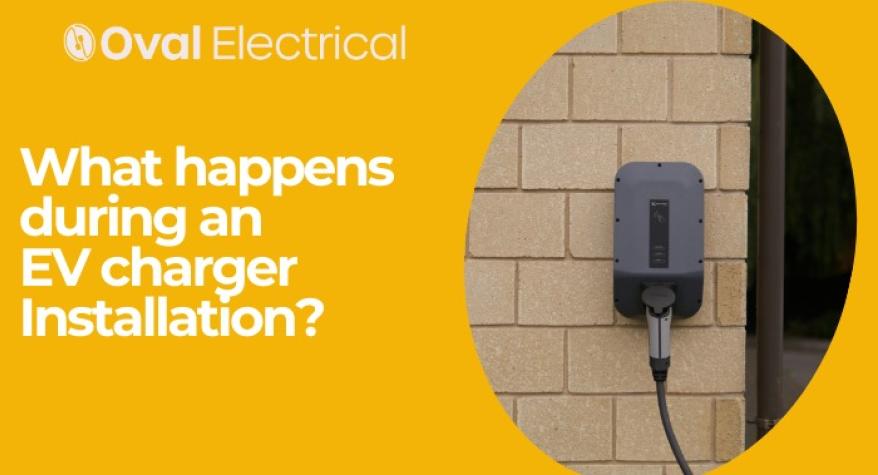
If you’re considering installing an EV charger at your property, here’s what typically happens during the installation process with Oval Electrical.
Initial Survey and Checks
Before installation begins, your electrician will carry out a survey to make sure your property is suitable for an EV charger and that the electrical system can safely support it.
This usually involves checking:
- The main fusebox for the property is suitable for use
- The incoming supply cable and earthing arrangement is adequate
- Where the charger will be located and what charger will be installed
- Potential cable routes from the fusebox to the EV charger location
- Internet/WiFi arrangements to ensure the charger can get a wifi connection
The survey also allows the electrician to identify if any additional equipment may be required, such as load management or surge protection devices
Receiving Your Quote
After the survey has been completed, you will receive a clear quote for the installation.
This will normally include:
- Supply and installation of the EV charger
- Any required protective devices and alterations to existing installation
- Cable routing and containment
- Testing and certification
Having a survey beforehand ensures the quote is accurate and transparent, with no unexpected costs later on.
DNO Notification or Permission
Before EV charger installation can go ahead, the charger installation needs to be notified to your local Distribution Network Operator (DNO).
The DNO manages the electricity network in your area and must be informed when larger electrical loads such as EV chargers are installed.
In Brighton & Hove, the local electricity network is operated by UK Power Networks.
Depending on your property and the type of charger being installed:
- Some installations can be installed and then notified to the DNO afterwards
- Others may require approval before installation begins
This normally depends on factors such as the size of the charger, your existing electrical supply capacity, and whether load management equipment is being installed.
In most cases, your electrician will handle the DNO notification or application process on your behalf, so you don’t need to deal with the paperwork.
Choosing the Installation Location
The charger will normally be installed on an external wall close to where the vehicle is parked.
Your electrician will help choose the best location by considering:
- Parking position of the car
- Cable reach to the charging port
- Safe cable routing
- Weather protection
- Ease of access
Many homeowners in Brighton choose the front of the house or driveway wall, but garages and side walls are also common options.
Installing the new Supply Cable
Once the location is confirmed, the electrician will run a dedicated supply cable from the Fusebox to the charger.
This cable is normally:
- Routed through the loft, external walls, or outside the property
- Installed in protective containment where necessary
- Properly clipped and secured for safety and neatness
EV chargers require a dedicated circuit, meaning the charger has its own protective devices in the fuse board.
Installing Protective Devices
To ensure the system is safe and compliant with UK electrical regulations, additional protection is installed.
This may include:
- RCBO protection in the consumer unit
- Surge protection where required
- Load management devices to prevent overloading the property’s supply
Modern EV chargers often also include built-in safety protection.
Mounting the EV Charger
The charger unit is then securely mounted to the wall.
The electrician will:
- Fix the charger to the wall
- Connect the power supply cable
- Seal any external entry points
- Configure the charger if it’s a smart model
At this stage the installation will start to look complete.
Testing and Certification
Once installed, the electrician will carry out a full series of electrical safety tests to ensure everything is working correctly.
This includes:
- Insulation resistance testing
- Earth fault loop testing
- RCD/RCBO testing
- Functional testing of the charger
You will then receive the appropriate electrical certification confirming the installation meets UK regulations.
Setting Up the Charger
If your EV charger has smart features, the installer will help set it up.
This usually involves:
- Connecting the charger to your WiFi
- Installing the charging app
- Setting charging schedules
- Demonstrating how to start and stop charging
Ready to Charge
Once everything is tested and set up, your charger is ready to use.
Most home EV chargers allow you to:
- Fully charge your car overnight
- Take advantage of cheaper off-peak electricity tariffs
- Avoid relying on public charging points
For many EV owners, a home charger quickly becomes the most convenient way to charge their vehicle.
EV Charger Installation in Brighton & Hove
If you're considering installing a home EV charger in your Brighton home, it’s important to use a qualified electrician who understands EV charging systems and UK electrical regulations.
Oval Electrical provides professional EV charger installations across Brighton & Hove and the surrounding areas, including surveys, DNO notifications, and full installation.