




I have always been happy with the quality of work delivered by Oval Electrical over the last few years.
With electric vehicles becoming more popular across the UK, many homeowners are asking the same question: is my home actually ready for an EV charger?
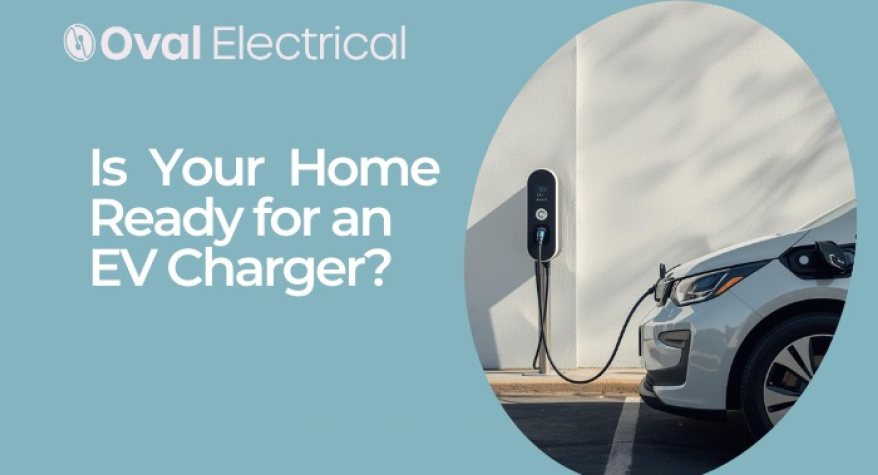
Installing an EV charger at home is convenient, cost‑effective, and can add value to your property, but not every home is immediately suitable without some checks or upgrades.
In this guide, we’ll explain what’s required for an EV charger installation, common issues we find, and how to prepare your home properly.
What Is a Home EV Charger?
A home EV charger (also known as a charge point) is a dedicated electrical unit installed at your property to safely charge your electric vehicle. Most UK homes install:
- 7kW single‑phase chargers (the most common)
- Tethered or untethered units depending on preference
Charging via a standard 3‑pin socket is not recommended for regular long term use due to safety and overheating risks.
What Does Your Home Need for an EV Charger?
Before installing an EV charger, several key factors must be checked by a site survey.
1. Electrical Supply Capacity
Most UK homes have a single‑phase supply, which is usually sufficient for a 7kW charger. However, we need to confirm the following:
- Main fuse size (typically 60A to 100A)
- Overall existing demand on the electrical installation
- Whether your supply can safely handle the additional load
If the supply is limited, load management solutions or upgrades may be required.
2. Condition of Your Consumer Unit
Your fusebox must be compliant to support an EV charger safely. Common issues include:
- Older plastic consumer units
- Lack of spare ways
- No or incorrect RCD or insufficient protection
- No surge protection
In many cases a Fusebox upgrade is recommended before installing an EV charger, However if that is not possible fitting a separate fusebox for the EV charger is allowed
3. Earthing and Bonding Arrangement
Correct earthing is critical for EV charger safety. Depending on your property, you may have:
- TN‑CS (PME)
- TN‑S
- TT earthing systems
You should also have appropriate bonding cables connecting your incoming utilities pipework (such as water and gas)
Some earthing types require additional protection such as earth rods or built‑in safety devices within the charger.
4. Off‑Street Parking
You’ll need:
- A driveway or allocated parking space
- A suitable mounting location (wall or post)
- A safe cable route from the consumer unit to the charger
If parking is some distance from the house, additional groundwork or external cabling may be required.
Do You Need Permission to Install an EV Charger?
In most cases, planning permission is not required for domestic EV chargers. However, permission may be needed if:
- Your property is listed
- You live in a conservation area
- The charger faces a public highway
We can advise you during a site survey if any permissions are required.
Do You Need an Electrical Survey Before Installation?
Yes! a professional survey is essential. An EV charger installation typically starts with:
- An assessment of your existing electrics
- Load calculations
- Earthing and bonding checks
- Advice on the most suitable charger for your vehicle and usage
This ensures the installation is safe, compliant, and future‑proof.
Can Older Homes Have EV Chargers?
Yes , but upgrades are sometimes needed. Older properties may require:
- Consumer unit upgrades
- Improved earthing and bonding
- Supply upgrades via the DNO (Distribution Network Operator)
We regularly install EV chargers in older homes across Brighton, Hove, and surrounding areas.
How Much Does an EV Charger Installation Cost?
The cost depends on:
- Charger type and brand
- Distance from consumer unit to charger location
- Condition of existing electrics
- Whether upgrades are required
At Oval Electrical, we provide clear, upfront pricing following a proper assessment, no surprises.
Why Use a Qualified EV Charger Installer?
EV chargers are high‑load electrical installations and must comply with:
- BS 7671 Wiring Regulations
- Part P Building Regulations
Using a qualified, registered electrician ensures:
- Safe installation
- Proper certification
- Manufacturer warranty compliance
- Peace of mind
Is Your Home Ready?
If you’re considering an electric vehicle or already own one, the best next step is a professional assessment. If you’re a homeowner in Brighton, Hove, Uckfield, or nearby areas, Oval Electrical can advise, install, and certify your EV charger safely and professionally.
Get in touch today for friendly advice or to book an EV charger survey.